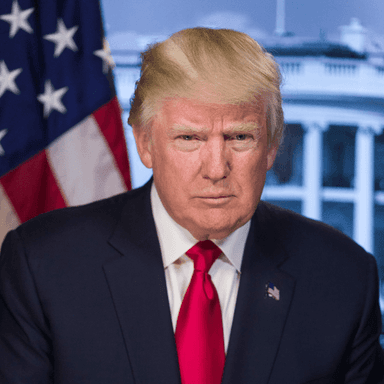
Donald Trump
On this page
Donald Trump: Quick Facts
- Born
- 1946
- Birthplace
- Queens, New York, USA
- Nationality
- American
- Education
- University of Pennsylvania (Wharton School)
- Known for
- 45th and 47th President of the United States
- Current role
- President of the United States
Donald Trump and Cryptocurrency: Policy Shifts in the Second Term
Donald Trump, the 45th and 47th President of the United States, has demonstrated a significant evolution in his administration's stance on Cryptocurrency. After expressing skepticism during his first term, his 2024 campaign featured policy signals broadly interpreted as favorable to the digital asset industry, aiming to position the U.S. as a leader in the field while opposing certain governmental controls like a Central Bank Digital Currency.
Note: This article discusses potential policy scenarios, campaign promises, and hypothetical regulatory changes based on public statements and industry speculation. It should not be treated as official legal or policy guidance. Always refer to official government sources for up-to-date information on actual policy implementations.
From Skepticism to Campaign Embrace (Pre-2025 Context)
President Trump's initial public comments on cryptocurrency were largely critical. In a notable 2019 tweet, he stated he was "not a fan of Bitcoin and other Cryptocurrencies," describing them as "not money" and based on "thin air."
However, his position shifted markedly during the lead-up to and during the 2024 election cycle. He began actively engaging with the crypto community, criticizing the regulatory approach of the incumbent administration as an "anti-crypto crusade," accepting campaign donations in cryptocurrency, and even launching several personal NFT collections. This change was a key theme during his successful 2024 presidential campaign, where he promised to foster a more welcoming environment for blockchain innovation in the US.
Potential Policy Actions & Regulatory Changes
Based on campaign statements and industry speculation, potential policy changes that could impact the digital asset sector include:
- Potential Executive Orders:
- Regulatory Framework: Campaign discussions suggested establishing a federal policy supportive of "responsible growth" in digital assets, potentially creating a working group to review existing rules and propose a new regulatory framework. Campaign rhetoric indicated opposition to a US CBDC and support for US dollar-backed stablecoins. See: Central Bank Digital Currencies.
- Bitcoin Reserve Discussions: The idea of a national Bitcoin reserve has been discussed in political circles, potentially using Bitcoin already held by the US government through asset forfeitures. However, any such program would require formal establishment and Congressional oversight. The feasibility and implementation of such a reserve remain speculative.
- Potential Regulatory Shifts:
- SEC Leadership Changes: Campaign discussions suggested potential leadership changes at the SEC that could shift focus toward regulatory clarity rather than enforcement. However, actual appointments and policy changes would depend on Senate confirmations and formal agency actions. Any changes to enforcement priorities or guidance would require official agency announcements.
- Banking Policy: Campaign rhetoric suggested easing restrictions on banks providing crypto-related services, but actual policy changes would require formal guidance from banking regulators (OCC, FDIC, Federal Reserve).
- DOJ Enforcement: Policy discussions have mentioned potentially refocusing enforcement priorities, but any organizational changes or new guidance would require formal Department of Justice announcements.
Supporting US Bitcoin Mining
President Trump has consistently voiced support for Bitcoin Mining within the United States, framing it as beneficial for national energy infrastructure and energy dominance. While specific federal incentives proposed during the campaign might require legislative action, the overall administrative tone has been interpreted as encouraging for the domestic mining sector. Discussions around the environmental impact of Proof-of-Work mining continue. See: Crypto and the Environment.

Department of Government Efficiency (DOGE) and Elon Musk
Campaign discussions and policy proposals have mentioned the potential establishment of a Department of Government Efficiency (DOGE), potentially tasked with reducing federal spending and bureaucracy. However, any such department would require formal establishment through executive action or legislation.
- Campaign discussions suggested Elon Musk could potentially serve in an advisory role, though any such appointment would require formal confirmation and official announcements.
- Policy discussions have mentioned the potential use of Blockchain technology for government efficiency, but any concrete implementations would require formal agency decisions and public announcements.
Cryptocurrency ETFs
The landmark approvals for Spot Bitcoin ETFs (January 2024) and Spot Ether ETFs (May 2024) occurred before any potential second term. Industry observers have speculated that potential shifts in SEC leadership could potentially improve prospects for future ETF applications based on other Altcoins or incorporating features like staking rewards, although each application would still undergo a rigorous review process regardless of administration.
Impact, Criticisms, and Outlook
Campaign promises and policy signals suggesting a more crypto-friendly regulatory approach have been welcomed by many in the US digital asset industry. However, the actual impact would depend on implementation:
- Implementation Details Matter: Any potential impact would hinge on specific regulations that might be proposed, potential Congressional legislation (like the FIT21 bill), and how agencies interpret and enforce rules going forward.
- Balancing Innovation and Protection: Critics raise concerns that reducing regulatory oversight too much could undermine investor protection and potentially facilitate illicit finance, despite campaign rhetoric focusing on "responsible" growth.
- Market Volatility: Government policies and even rhetoric regarding crypto can significantly influence market prices. Any potential establishment of a Bitcoin reserve could also become a market factor, though such discussions remain speculative.
- Policy Consistency: The notable shift from previous criticisms draws attention and raises questions for some regarding the long-term durability of any pro-crypto policy stance.
Conclusion: Potential Shifts in US Crypto Policy
Campaign statements and policy signals from Donald Trump's 2024 campaign suggested a potential pivot in the United States' approach to cryptocurrency and blockchain technology. Campaign rhetoric indicated support for establishing a more supportive policy framework, discussing concepts like a national Bitcoin reserve, opposing a CBDC, and potentially installing new leadership at key regulatory agencies like the SEC. However, any actual policy changes would require formal implementation through executive orders, agency actions, and potentially Congressional legislation. The specific contours of any new regulatory landscape would depend on actual policy implementation, and the long-term economic and societal impacts of any such policies would remain to be seen.
Donald Trump: Frequently Asked Questions
What is Donald Trump's connection to cryptocurrency?
Having previously described Bitcoin critically, Trump shifted to a markedly pro-crypto position during the 2024 election campaign, courting industry support and pledging a friendlier regulatory approach. His second administration has been associated with a significant change in US crypto policy direction.
Does Donald Trump own cryptocurrency?
Trump has been associated with NFT collections issued in his name and with ventures linked to his family, and his disclosed holdings have included digital assets. Specific holdings change and are reported through official disclosures, so consult current filings rather than any fixed figure.