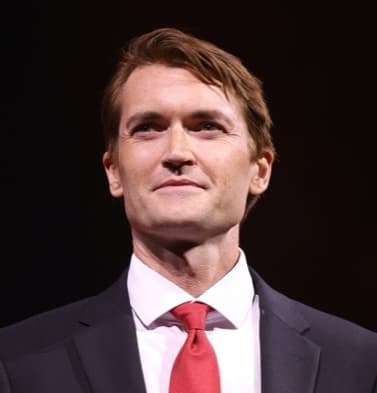
Arthur Hayes
On this page
Arthur Hayes: Quick Facts
- Born
- 1985
- Birthplace
- Detroit, Michigan, United States
- Nationality
- American
- Education
- University of Pennsylvania, Wharton (BS Economics, 2008)
- Known for
- Co-founding BitMEX; popularizing the perpetual swap
- Current role
- Chief Investment Officer of Maelstrom, his family office
- Founded
- BitMEX (2014), with Ben Delo and Samuel Reed
- Status
- Pardoned by President Donald Trump in March 2025
Arthur Hayes: Perpetual-Swap Pioneer and Relentless Market Narrator
Arthur Hayes is an American derivatives trader who co-founded the crypto exchange BitMEX in 2014 and ran it as CEO until 2020, and who is best known for popularizing the perpetual swap, the contract that became the dominant instrument in crypto trading. As BitMEX co-founder and CEO, he helped engineer a new market primitive in 2016 that would rewire crypto trading worldwide: the Bitcoin perpetual swap. At the peak of the 2017 and 2019 cycles, BitMEX's XBTUSD contract set the tempo for liquidations, open interest, and trader psychology across the entire market. For supporters, Hayes is a crypto pioneer and a shrewd macro storyteller who translated professional derivatives into the internet age. For critics, BitMEX's extreme leverage and early compliance gaps exemplified crypto's wild frontier.
Hayes's legacy sits at the collision of innovation and responsibility. His story moves from Ivy League finance to Hong Kong trading desks, from the launch of a product that never expires to a landmark regulatory case that reshaped how centralized venues operate. Even now, as an investor and essayist, his writing on Bitcoin, Ethereum, liquidity, and macro shocks is still required reading for derivatives-native traders who grew up with funding rates and liquidation cascades. The market structure he helped popularize remains core plumbing of crypto.
Early Life and Background
Arthur Hayes was born in Detroit, Michigan, in 1985, to middle-class parents who worked for General Motors, and the family later moved to Buffalo, New York, where he finished school in 2004. He then studied economics at the Wharton School of the University of Pennsylvania, graduating in 2008 with a BS. After graduating, he moved to Asia to work as an equity derivatives trader, first at Deutsche Bank and then at Citi in Hong Kong. On those desks he learned the rhythms of volatility, the machinery of risk transfer, and how professional markets price liquidity when stress appears.
The timing mattered. The post-2008 environment trained a generation of traders to watch central banks as closely as they watched price. Hayes became fluent in how basis, term structure, and the opaque behavior of funding markets can dominate asset performance. That fluency would later show up in the design and marketing of an instrument built for a 24/7 internet market where margin and funding never sleep.
Entry into Crypto
In 2013, after a round of banking layoffs in Hong Kong, Hayes found himself with time and curiosity. Bitcoin was surging into public view, and Asia's bustling retail markets offered rich price discrepancies. He began actively trading and quickly ran into a structural wall: spot markets were wild and fragmented, while derivatives were rudimentary or nonexistent. There was no easy way to hedge exposure or run professional strategies across a global venue map.
The opportunity was obvious. In 2014, Hayes co-founded BitMEX with Ben Delo and Samuel Reed to build purpose-built crypto derivatives for a market that never closed. The initial pitch was simple: bring professional-grade instruments and risk engines into crypto while delivering the speed and transparency that the ecosystem demanded. Understanding the money and the mechanics would matter to users just discovering Bitcoin as a macro asset and payment network in one.
Major Contributions and Projects
The breakthrough came in 2016 when BitMEX launched the XBTUSD perpetual swap, a synthetic futures contract pegged to spot but without an expiry. The design used a funding rate to keep the contract price in line with a reference index, and it solved a core problem of classic futures in a hyperactive market. Traders could hold positions indefinitely, size up, and not worry about roll dates or multi-month calendar spreads. It was a simple idea with profound consequences for liquidity and speculation.
- Funding rate innovation and reflexive liquidity: The periodic funding payments aligned the perpetual with underlying spot while creating a constant flow that day traders could harvest or pay. The transparency of the index, margin rules, and mark price was critical for trust.
- Liquidation engine and insurance fund: BitMEX's risk engine aggressively liquidated under-margined positions, routing residual risk into an insurance fund that grew to tens of thousands of BTC at its height. This reduced socialized losses and made 100x leverage operationally possible for a global audience.
- Market structure standard: Within a few years, perpetuals were ubiquitous. Competitors like Binance, Bybit, and Deribit rolled out their own variants, and open interest migrated across venues in a cycle-by-cycle dance.

BitMEX under Hayes also popularized transparent documentation and vivid market commentary. The platform's Crypto Trader Digest essays taught an entire generation of traders to think about funding, basis, and liquidation cascades as core parts of crypto's price action. The internal language of perpetuals became the industry's lingua franca. That is why many observers credit the BitMEX team with operationalizing the perpetual swap in a way that the broader market could adopt at scale, especially as volatility surged during cyclical peaks. For readers new to the mechanics, see What Are Perpetual Futures? for a primer on how funding, mark price, and leverage interact.
BitMEX's ascent happened as centralized trading hubs crystallized. The industry now distinguishes venue models using frameworks like Understanding Crypto Exchanges, watches index composition closely, and contrasts centralized matching engines with smart-contract-based venues explained in What Is a DEX?. Even as decentralized derivatives grew, the perpetual swap's funding cadence and cross-margin logic remained the template. Hayes's fingerprint is visible wherever traders measure basis, track sentiment with tools like the Fear and Greed Index, or digest the reality that crypto's unique liquidity profile magnifies moves. For a sense of why these markets move the way they do, start with Understanding Cryptocurrency Volatility.
Controversies and Criticism
With scale came scrutiny. On October 1, 2020, U.S. authorities charged BitMEX and several founders and executives with operating an unregistered trading platform and violating the Bank Secrecy Act by failing to implement adequate anti-money-laundering and know-your-customer programs. Hayes voluntarily surrendered in April 2021. In February 2022, he pleaded guilty to violating the Bank Secrecy Act. In May 2022, he was sentenced to two years of probation, including six months of home detention, and paid a 10 million dollar criminal fine. He served no prison time.
The chapter closed in March 2025, when President Donald Trump pardoned Hayes together with co-founders Ben Delo and Samuel Reed and former business development head Gregory Dwyer. The pardons wiped the convictions rather than merely ending the sentences, and they arrived as Washington's posture toward the industry shifted. Delo called the outcome a vindication of the position the founders had always held, that the case should never have been brought as a criminal matter at all. Critics read the same pardons as evidence that crypto enforcement had become a political variable rather than a settled standard.

The case became a line of demarcation. It pushed centralized exchanges to tighten controls, formalize compliance, and decide where to serve users. U.S.-focused traders increasingly migrated to regulated spot platforms like Kraken while offshore derivatives platforms refined onboarding and product design. Critics had long argued that 100x leverage could catalyze disorderly markets and frequent liquidation spirals. Supporters countered that transparent funding, robust insurance funds, and clear risk parameters were a more honest way to manage leverage than opaque over-the-counter margin. The legal episode, whatever one's view, accelerated the maturation of crypto market infrastructure and set clearer expectations for compliance.
Philosophy and Vision
Hayes writes and speaks about crypto through a macro lens. He argues that Internet-native assets exist in a world defined by central bank policy, dollar liquidity, and political cycles. In his essays, Bitcoin is a monetary asset whose supply discipline gives it strategic staying power, while Ethereum is programmable settlement that can accumulate economic gravity through network effects. He often frames crypto markets as reflexive systems where new collateral, higher prices, and easier credit feed each other until leverage unwinds, revealing who was hedged and who was hoping.
He helped popularize the idea that perpetual funding and basis are not just trader toys. They are signals. They mark the direction and intensity of demand for leverage. Understanding them means understanding how a 24/7 market responds to liquidity shocks. That framing continues to influence how analysts cover cycles, how builders design products, and how regulators think about systemic risk in an asset class where weekend gaps and global holidays do not exist.
Key Developments and Later Ventures
After stepping down from BitMEX leadership in October 2020 amid the legal proceedings, Hayes shifted to prolific long-form writing and active investing. He runs Maelstrom, the family office built on his BitMEX fortune, as its Chief Investment Officer, backing early-stage infrastructure and token projects. His newsletter, Crypto Trader Digest, carries the same name as the BitMEX research letter that first built his readership and remains one of the most widely read macro publications in the industry. His essays dissect correlations between crypto, interest rates, and equities, often exploring how market plumbing drives narrative and not the other way around. He also spends time advising founders and trading his views in public, which keeps him squarely in the conversation every time the basis flips or funding rates invert.
The market he helped shape is far more competitive today. Offshore venues fight for derivatives liquidity, regulated exchanges seek clarity on listings, and algorithmic traders arbitrage funding across platforms. Major exchange operators like Changpeng Zhao built vast ecosystems around derivatives, while the origin myth of decentralization seeded by Satoshi Nakamoto continues to inspire fully on-chain alternatives. The standardization of perpetuals across Bybit, Deribit, and Binance is a testament to the staying power of the format.
For investors, the broader context matters. Crypto's cyclical liquidity and risk appetite can be tracked with sentiment tools like the Fear and Greed Index and by watching how basis evolves across venues. Capital flows related to dominance, sector rotations, and valuation frameworks explained in What Is Market Cap in Crypto? round out the picture. Hayes's writing aims to interpret those signals, connecting them to policy shifts and structural changes in market microstructure.
The End of BitMEX
On 23 July 2026, BitMEX told users it was winding down, and the exchange stopped all services at 04:00 UTC on 23 September 2026, ending an eleven year run. The company framed the decision as the outcome of a strategic review of its business and the wider market. New registrations closed immediately, and from 26 August users could only reduce existing positions rather than open new ones.
The closure was less a collapse than a slow erosion. The venue that once set the tempo for global crypto liquidity had spent years losing derivatives market share to rivals that could onboard the users BitMEX could not, and the prosecution that reshaped its compliance obligations also cost it the offshore freedom that made it fast in the first place. Hayes had long since moved on, but the sunset closed the book on the platform that made both his fortune and his reputation. The product outlived the exchange: perpetual swaps now trade in far greater size on venues that copied the design than BitMEX ever handled itself.
Legacy and Influence
Arthur Hayes's core legacy is twofold. First, operationalizing the perpetual swap turned crypto's 24/7 chaos into a coherent derivatives market with shared concepts, transparent risk architecture, and standardized pricing signals. Second, his essays gave traders a vocabulary for reflexivity, funding-led price action, and macro-liquidity narratives tailored to internet money. The controversies are part of the record, and they became a catalyst for better compliance and more robust risk controls across centralized venues.
History will likely remember Hayes as a market builder who forced crypto to learn the hard lessons of leverage quickly. The product he championed redefined how risk is transferred in digital markets. Whether one is a fan or a skeptic, the modern crypto derivatives stack still speaks BitMEX's language, and Arthur Hayes remains one of its clearest, most provocative translators. The exchange is gone and the conviction is pardoned, but the contract he championed trades around the clock on nearly every venue that matters.
Arthur Hayes: Frequently Asked Questions
Who is Arthur Hayes?
Arthur Hayes is an American entrepreneur and investor best known as the co-founder and former CEO of BitMEX. He helped popularize the perpetual swap, which became the dominant instrument in crypto derivatives. He is also a prolific macro and markets essayist.
What did Arthur Hayes pioneer in crypto?
Hayes and the BitMEX team operationalized the Bitcoin perpetual swap in 2016, standardizing funding rates, mark prices, and insurance fund mechanics. This product allowed traders to hold leveraged positions indefinitely and reshaped crypto market structure.
What happened between Arthur Hayes and U.S. regulators?
In October 2020, U.S. authorities charged BitMEX and several executives with Bank Secrecy Act violations and operating an unregistered trading platform. Hayes surrendered in April 2021, pled guilty in February 2022, and in May 2022 received two years of probation, six months of home detention, and a 10 million dollar fine. In March 2025, President Donald Trump pardoned Hayes along with co-founders Ben Delo and Samuel Reed and former employee Gregory Dwyer.
What is Arthur Hayes doing now?
Hayes is Chief Investment Officer of Maelstrom, the family office he built on his BitMEX fortune, and writes the macro newsletter Crypto Trader Digest. He no longer runs BitMEX, which shut down permanently on 23 September 2026 after an eleven year run.
How did BitMEX influence crypto markets under Hayes?
BitMEX popularized perpetual futures, transparent funding mechanics, and a robust liquidation engine backed by an insurance fund. Its approach established the core vocabulary and benchmarks that competitors later adopted across centralized and on-chain derivatives platforms.