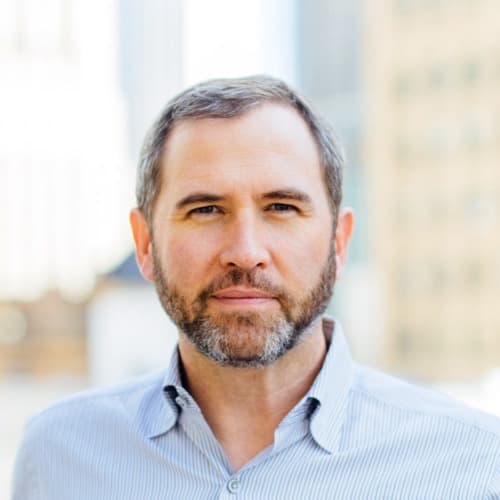
Ross Ulbricht
On this page
Ross Ulbricht: Quick Facts
- Birthplace
- Austin, Texas, USA
- Nationality
- American
- Education
- UT Dallas (BS Physics); Penn State (MS Materials Science)
- Known for
- Founding the Silk Road dark net marketplace
- Current role
- Founder and operator of Silk Road (2011-2013)
- Status
- Released January 2025 after a full presidential pardon
Ross Ulbricht: The Silk Road Founder Who Forced Bitcoin Into the Spotlight
Ross Ulbricht is the American entrepreneur who created Silk Road, the Tor-based dark net marketplace that ran from 2011 to 2013 and used Bitcoin as its only medium of exchange. He was arrested in 2013, sentenced in 2015 to two life terms plus 40 years without parole, and released on January 21, 2025 when President Donald Trump granted him a full and unconditional pardon after roughly eleven years in prison. In building Silk Road, Ulbricht helped propel Bitcoin from a niche experiment among cypherpunks into one of the most widely debated technologies of the digital age. His story is inseparable from the early history of Bitcoin: a tale of idealism and decentralization colliding with the realities of law, policy, and human behavior. To many, he is a symbol of technological disruption taken too far. To others, a cautionary figure whose severe punishment reshaped the crypto community's understanding of privacy, risk, and responsibility.
"Bitcoin is a peer-to-peer electronic cash system." - Satoshi Nakamoto, 2008
Silk Road's rise and fall marked a pivotal inflection point for crypto. It revealed both the potency of permissionless money and the difficulties of building trust, safety, and accountability online without central intermediaries. Whether viewed as a misguided crypto pioneer, an outlaw, or a man who served a disproportionate sentence, Ulbricht's imprint on the culture and trajectory of Bitcoin is undeniable.
Early Life and Background
Ross William Ulbricht was born in Austin, Texas in 1984. He grew up in a supportive family environment and excelled academically, developing a strong aptitude for the sciences. Ulbricht earned a Bachelor of Science in physics from the University of Texas at Dallas, and later completed a Master of Science in materials science and engineering at Penn State University. While his formal training was technical, friends and writings suggest he was equally influenced by libertarian ideas about free markets and minimal government.
After graduate school, Ulbricht dabbled in several entrepreneurial ventures. He tried his hand at online businesses and even day trading, chasing a vision of independent, unconstrained work. This blend of technical curiosity and philosophical interest in economic freedom would soon intersect with a brand-new monetary experiment that aligned with many of his ideals: a borderless, censorship-resistant currency on a nascent blockchain.
Entry into Crypto
In 2010 and 2011, Bitcoin was an obscure technology clustered around mailing lists and forums. The whitepaper by the anonymous Satoshi Nakamoto had circulated among developers and early adopters, including cryptographers like Hal Finney. Ulbricht encountered Bitcoin in that formative period. It was everything the early community touted: open source, scarce, decentralized, and settled by a Proof-of-Work system that required no central authority to validate transactions. For someone fascinated by market freedom and the internet's ability to route around traditional gatekeepers, Bitcoin felt like a once-in-a-generation innovation.
From there, Ulbricht conceived Silk Road as a marketplace that would test the limits of online commerce and privacy technology. By combining Tor's anonymity layer with Bitcoin's pseudonymous payments, he aimed to build a platform where consenting adults could transact without surveillance and with robust user protections like escrow and vendor reputations. As the site's administrator, operating under the moniker Dread Pirate Roberts, he launched Silk Road in early 2011. The experiment immediately attracted attention, both from privacy advocates and from those interested in its more illicit offerings.
Major Contributions and Projects
Silk Road popularized a set of design patterns that would influence crypto culture and subsequent online markets. It used Bitcoin to separate identity from money flows, relied on escrow to mitigate counterparty risk, and codified social trust through vendor ratings long before Web3 marketplaces became a mainstream idea. It simultaneously demonstrated Bitcoin's unique utility and its challenges. By making pseudonymous commerce viable, it also made law enforcement take crypto seriously far earlier than it otherwise might have.
The platform's impact was measurable. Bitcoin liquidity grew as Silk Road took off. Early onramps like Coinbase, Kraken, Bitstamp, and later Gemini began to professionalize fiat-to-crypto access as more people looked for legitimate ways to acquire BTC. Policy debates intensified as well, with regulators and technologists grappling over whether the underlying tool or the human use case was the problem. In the process, Bitcoin's brand matured from obscure experiment to a consequential technology with implications for finance, speech, and the internet's architecture.

At its height, Silk Road hosted tens of thousands of listings and hundreds of thousands of accounts, according to government filings. In October 2013, federal agents arrested Ulbricht in a San Francisco public library. The seizure that followed was a milestone in crypto history: authorities confiscated 144,336 BTC from Ulbricht's laptop, one of the largest single Bitcoin seizures to that time. Additional BTC seized from the marketplace itself, approximately 29,656 coins, were auctioned by the U.S. Marshals Service in 2014. These auctions, which famously included buyers from the venture capital world, further legitimized the idea that sovereign entities and institutional investors might inevitably engage with Bitcoin, even when it entered their custody by way of criminal proceedings.
Silk Road's operational lessons also set a tone for years of crypto discourse. Centralized escrow concentrated risk in administrators. Pseudonymity worked until operational security failed. Users began to internalize the importance of key management and self-custody, the backbone of modern crypto hygiene. Concepts like a seed phrase and secure storage with a hardware wallet became more widely discussed as the community learned from avoidable lapses that left trails hackers and investigators could follow.
As decentralized finance evolved, people contrasted centralized marketplaces like Silk Road with the possibility of on-chain, permissionless trading. This foreshadowed the later rise of non-custodial protocols and the debate around what a truly censorship-resistant DEX would imply for compliance and consumer protection. Elsewhere, the broader developer ecosystem, including builders like Vitalik Buterin, would push toward programmable money and smart contracts, while the lessons of Bitcoin's early gray-market phase hung in the background as a stark reminder of what unfettered internet finance could enable.
Controversies, Arrest, Trial, and Sentencing
Silk Road's core controversy was direct and unavoidable: it facilitated large-scale trade in illegal drugs and other contraband. Law enforcement spent years tracking vendors and buyers, penetrating operational security, and ultimately identifying the administrator. On October 1, 2013, the FBI arrested Ulbricht at the Glen Park branch of the San Francisco Public Library. They seized his laptop while it was unlocked and logged into the Silk Road administrator panel, a crucial move that preserved encrypted data and chat logs for trial.
The legal saga that followed became a landmark case in the politics of the internet and the ethics of technology. In February 2015, a Manhattan federal jury convicted Ulbricht on charges including conspiracies to traffic narcotics, launder money, and hack computers. In May 2015, Judge Katherine Forrest sentenced him to two life terms plus 40 years without the possibility of parole. The Second Circuit Court of Appeals affirmed the conviction and sentence in 2017, and the U.S. Supreme Court declined to hear the case in 2018. At that point every ordinary avenue of appeal was closed, and clemency was the only route left.

The severity of the sentence remains fiercely debated. Supporters argue that Ulbricht's punishment does not align with nonviolent conduct and that parallel marketplaces quickly re-emerged, proving the futility of crushing a single platform. Critics maintain that Silk Road normalized and scaled access to dangerous substances and that a heavy penalty was intended to deter technologists from enabling similar enterprises. Regardless of one's view, the outcome influenced how founders, investors, and even protocol designers think about the implications of the tools they build.
The 2025 Pardon and Release
Clemency arrived on January 21, 2025. President Donald Trump granted Ulbricht a full and unconditional pardon, fulfilling a promise he had made at the Libertarian National Convention in May 2024, and framing the decision as a nod to Ulbricht's mother Lyn and to the libertarian movement that had campaigned for a decade. Ulbricht walked out of the federal penitentiary in Tucson, Arizona the following day, aged 40. Because it was a pardon rather than a commutation, it erased the conviction itself rather than simply ending the sentence.
The reaction split along familiar lines. Much of the crypto industry treated it as the closing chapter of a case it had long seen as disproportionate punishment for a nonviolent offence. Members of Congress from both parties objected that the pardon excused large-scale drug trafficking and undercut the prosecutors who built the case. Both readings had been rehearsed for ten years; the pardon simply settled which one carried legal force.
Ulbricht made his first public appearance in May 2025, speaking at the Bitcoin 2025 conference in Las Vegas. He opened with the plain observation that he was no longer in a prison cell, thanked Trump and the supporters who had pressed for his release, and built his remarks around freedom, decentralization, and unity, arguing that Bitcoin does not work without freedom. He also described the disorientation of returning to a world that had moved on without him, having effectively entered a time capsule in 2013 and emerged into an industry worth orders of magnitude more than the one he left.
Philosophy and Vision
Ulbricht's writings and forum posts evoke a consistent set of ideals: individual liberty, voluntary exchange, and distrust of central intermediaries. In that sense, he shared a philosophical lineage with early Bitcoiners who saw digital cash as a path to self-sovereignty. But Silk Road operationalized those ideas in a domain that squarely conflicted with the law. The resulting clash put his libertarian ethics in direct conflict with public health, safety, and the state's interest in enforcing criminal statutes.
In hindsight, the Silk Road experiment forced an industry-wide reckoning with the difference between building neutral tools and actively administering platforms that guide illicit commerce. It also helped catalyze a more mature framing of decentralization. Bitcoin's settlement rules and blockchain transparency can enhance accountability as well as privacy. The same early volatility and supply dynamics governed by Proof-of-Work - later punctuated by cyclical events like the Bitcoin halving - continued to drive market cycles, while the social contract around responsible building and policy engagement steadily evolved.
Public Campaigns, Art, and Cultural Impact
In the years after sentencing, Ulbricht's family and supporters launched the FreeRoss campaign advocating clemency. The debate spilled beyond courtrooms into crypto conferences, podcasts, and social media, where Ulbricht came to symbolize questions about proportional justice in the internet age. In December 2021, the Ross Ulbricht Genesis Collection, a set of NFTs featuring Ulbricht's art created over many years, was sold to raise funds for legal efforts and charitable causes. A collective known as FreeRossDAO emerged to pool capital and coordinate bidding, a high-profile example of a grassroots internet collective leveraging a DAO to back a cause.
The cultural footprint is complex. On one hand, Ulbricht's name is tied to a marketplace that facilitated illegal trade. On the other, his case accelerated mainstream awareness of pseudonymous finance, seeded a generation of security-minded crypto users, and influenced how regulated onramps like Coinbase, Kraken, Bitstamp, and Gemini positioned themselves as compliant gateways. The campaign itself became a fixture of crypto culture, a recurring cause at conferences and on social media that kept the case in front of an industry that had otherwise moved on.
Legacy and Influence
Ross Ulbricht's legacy in crypto is inseparable from contradiction. He was neither the first nor the last to test the boundaries of decentralized technology, but he was the figure whose marketplace pushed Bitcoin into the center of a global conversation about money, privacy, and law. Silk Road proved that code could collapse the distance between buyers and sellers across the world, and it taught the crypto community hard-won lessons about risk, ethics, user protection, and the consequences of centralization inside systems that otherwise advertise decentralization.
The early adoption shock that Silk Road produced helped surface Bitcoin's compelling properties to the public, while the subsequent arrests and seizures showed that pseudonymity is not immunity from accountability. The case spurred discussion on how to build safer systems, encouraged wallets to improve key management UX, and inspired later builders to explore more transparent, permissionless designs. For better and worse, Ulbricht became a catalyst. His actions and their aftermath continue to influence how policymakers approach crypto, how founders scope responsibility, and how users think about sovereignty. The 2025 pardon closed the legal chapter without resolving the argument underneath it, which is the one the industry has been having since 2011: how much freedom a payment network should grant, and who answers for what people do with it. That influence, forged in a turbulent chapter of Bitcoin's origin story, ensures his place in the history of digital money and the ongoing debate over the future of decentralized networks.
Ross Ulbricht: Frequently Asked Questions
Who is Ross Ulbricht?
Ross Ulbricht is an American entrepreneur best known for creating Silk Road, a dark net marketplace launched in 2011 that used Bitcoin for payments. He was arrested in 2013, convicted in 2015, and served roughly eleven years of a life sentence before President Donald Trump granted him a full and unconditional pardon on January 21, 2025.
Was Ross Ulbricht pardoned, and is he out of prison?
Yes. Trump issued a full and unconditional pardon on January 21, 2025, and Ulbricht walked out of federal prison in Tucson, Arizona the following day. The pardon fulfilled a pledge Trump made at the Libertarian National Convention in May 2024, and it wipes the conviction rather than merely shortening the sentence.
What was Silk Road and how did it use Bitcoin?
Silk Road was an online marketplace reachable only through Tor that facilitated trade in illegal goods, especially drugs. It relied on the pseudonymous payments Bitcoin made possible plus an escrow system that reduced counterparty risk, which accelerated early Bitcoin adoption and drew intense law enforcement scrutiny.
What happened at his trial and sentencing?
In February 2015, a Manhattan federal jury convicted Ulbricht of conspiracies involving narcotics trafficking, money laundering, and computer hacking. Judge Katherine Forrest sentenced him to two life terms plus 40 years without parole, a severity that fueled a decade-long clemency campaign until the 2025 pardon.
How did Silk Road affect the broader crypto industry?
Silk Road pushed Bitcoin into the spotlight, proved it worked for real online commerce, and forced regulators, exchanges, and builders to confront privacy, compliance, and platform risk years earlier than they otherwise would have. It indirectly pushed the industry toward professional, compliant fiat onramps.
What is FreeRossDAO?
FreeRossDAO is a community collective formed in 2021 to bid on a charity and clemency-focused NFT sale of Ulbricht artwork. It became a well known example of decentralized coordination raising funds and attention for a cause, tying crypto culture to legal advocacy.