Coinbase
On this page
Coinbase: Quick Facts
- Founded
- 2012
- Headquarters
- United States (remote-first)
- Founder(s)
- Brian Armstrong and Fred Ehrsam
- CEO
- Brian Armstrong (co-founder)
- Type
- Centralized exchange (CEX), publicly traded (Nasdaq: COIN)
- Users
- Estimated 100 million+; Coinbase stopped disclosing verified user counts after Q4 2022
- Custody
- Custodial; self-custody available via the separate Coinbase Wallet
- Availability
- United States and 100+ countries
Coinbase: A Publicly Traded US-Based Crypto Exchange
Founded in 2012 and headquartered in the United States, Coinbase has become one of the world's most recognized and widely used cryptocurrency exchanges. As a publicly traded company listed on the Nasdaq (ticker: COIN), Coinbase operates under significant regulatory oversight and financial transparency requirements, distinguishing it from many privately held global competitors. It has built a reputation, particularly among newcomers, for prioritizing ease of use and providing a relatively straightforward on-ramp into the world of digital assets like Bitcoin and Ethereum, while also offering more advanced features for experienced traders.
Core Offerings: Trading, Wallet, and Earning
Coinbase provides a suite of products catering to different user needs within the crypto ecosystem:
-
Trading Platforms:
- Simple Interface: The primary Coinbase app and website offer a streamlined interface designed for beginners, allowing easy buying, selling, and swapping of a wide array of cryptocurrencies using linked bank accounts, debit cards, or other payment methods. Pricing here typically involves a combination of a spread and a Coinbase Fee.
- Advanced Trade: Integrated within the main platform (having evolved from the former Coinbase Pro), Advanced Trade offers a more traditional exchange experience with detailed charts (including TradingView integration), order books, and various order types (market, limit, stop-limit). It generally features a lower maker/taker fee structure based on trading volume compared to the simple interface.
-
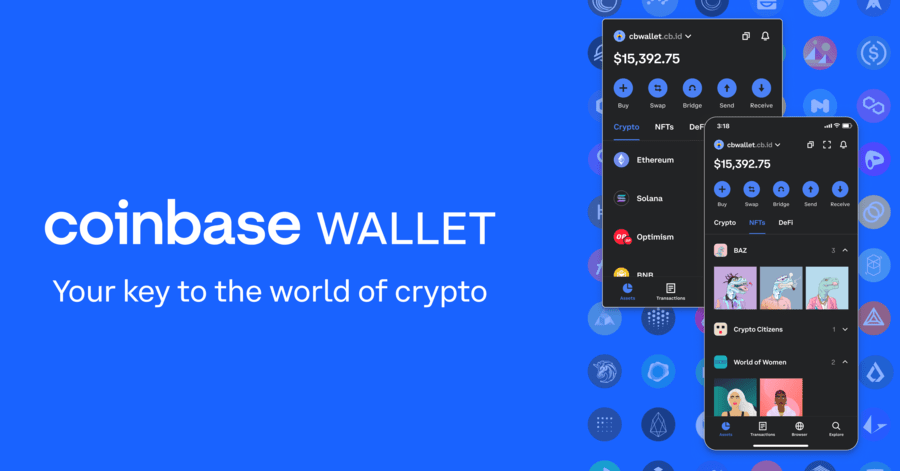
Coinbase Wallet: Importantly, this is a separate, non-custodial mobile app and browser extension. Unlike holding assets on the Coinbase exchange platform, Coinbase Wallet gives users direct control over their private keys and seed phrase. It allows users to securely store crypto and NFTs, explore the decentralized web (Web3), and interact directly with DeFi protocols and dApps. See: How To Store Crypto.
-
Earning Opportunities:
- ****Crypto Staking: Coinbase facilitates staking for eligible Proof-of-Stake assets (like Ethereum, Cardano, Solana, etc.). Users can opt-in to earn staking rewards directly through their Coinbase account, with Coinbase handling the technical validation process (this is a custodial staking service).
- Coinbase Earn: A popular educational program where users can watch short videos or read lessons about specific Altcoins and earn small amounts of those tokens by completing quizzes.
- Coinbase Card: A Visa debit card (availability varies by region) that allows users to spend cryptocurrency from their Coinbase account, often by converting it to fiat currency at the point of sale, potentially earning crypto rewards.
- Coinbase Prime: A distinct platform offering institutional clients services like secure custody, prime brokerage, advanced trading capabilities, and market analytics.
Security and Regulatory Compliance
Coinbase heavily emphasizes security and operates within established regulatory frameworks, particularly in the US:
- Regulatory Status: As a US-based, publicly traded company, Coinbase is subject to stringent financial regulations and reporting requirements by bodies like the SEC. It holds numerous state licenses (e.g., Money Transmitter Licenses, New York BitLicense) required for its operations. While it generally seeks compliance, like many large crypto entities, it has faced regulatory inquiries and lawsuits regarding the classification of certain assets or services.
- Security Practices: Coinbase implements various security measures, including:
- Storing a significant majority (reportedly ~98%+) of customer digital assets in offline cold storage.
- Mandatory Two-Factor Authentication (2FA) for account security.
- Insurance coverage for crypto held in its online hot storage systems against platform-level breaches (this typically does not cover individual account compromises due to phishing or weak passwords).
- Standard security protocols like encryption for sensitive data and employee background checks.
- Users should always employ personal security best practices: How to Avoid Crypto Scams.
User Experience & Education
A key part of Coinbase's appeal, especially historically, has been its focus on accessibility:
- Beginner-Friendly: The standard interface is widely considered one of the easiest ways for newcomers to make their first crypto purchase. See: How To Buy Your First Crypto.
- Educational Resources: Coinbase Learn offers a substantial library of articles, tutorials, and market updates designed to educate users about cryptocurrencies, blockchain technology, and market trends.
- Customer Support: Provides access to help centers and customer support channels, although response times and resolution effectiveness can vary based on user reports and support volume.
Points to Consider Before Using Coinbase
- Fee Structure: Coinbase's fee model can be relatively high, especially for small transactions made through the simple interface (which often includes both a spread in the price and a separate Coinbase Fee). Using the "Advanced Trade" interface generally offers significantly lower percentage-based maker/taker fees, more suitable for frequent or larger trades. Withdrawal fees for crypto also apply and vary by network.
- Custodial Risk (Exchange Platform): Assets held on the main Coinbase exchange platform are controlled by Coinbase (custodial). Users face counterparty risk - the risk associated with the platform's security and financial health. Using the separate, non-custodial Coinbase Wallet mitigates this specific risk.
- Asset Selection: While offering a wide range of popular cryptocurrencies, Coinbase's listing process is generally more conservative than some offshore exchanges due to regulatory considerations. Newer or more obscure altcoins may not be available.
- Market Volatility: As with all crypto investments, assets held on Coinbase are subject to market fluctuations and potential loss of value. See: Crypto Volatility.
Conclusion
Coinbase stands as a prominent and influential entity in the cryptocurrency ecosystem, particularly strong in the United States. Its status as a publicly traded company under US regulatory oversight provides a level of transparency and perceived stability often sought by both retail and institutional investors. Known for its user-friendly interface that simplifies the entry point for beginners, Coinbase also offers advanced trading features, staking, educational resources, and the distinct option of self-custody through its separate Coinbase Wallet app.
While users should be mindful of its fee structure (especially on simple trades) and the inherent risks of using any custodial platform for storing assets long-term, Coinbase remains a major gateway connecting traditional finance with the world of digital assets. Its ongoing efforts in compliance, security, and product expansion position it as a key player likely to continue shaping the mainstream adoption of cryptocurrency.
Werbung / Affiliate-Link
Visit Exchange
Learn more about this cryptocurrency exchange platform
This is an affiliate link. If you sign up through it we may earn a commission, at no extra cost to you. It does not influence our rating or what we write. See our Affiliate Disclosure.
This is not financial advice. Cryptocurrency exchanges involve significant risks, including potential loss of all funds. Always verify the platform is legal in your jurisdiction and never invest more than you can afford to lose.
Coinbase: Frequently Asked Questions
What is Coinbase?
Coinbase is a US-based cryptocurrency exchange founded in 2012 by Brian Armstrong and Fred Ehrsam. It is one of the largest and most widely used exchanges and has traded publicly on the Nasdaq under the ticker COIN since April 2021.
Is Coinbase safe?
Coinbase is a publicly listed US company subject to regulatory reporting requirements, keeps the large majority of customer assets in cold storage, and carries insurance on its hot wallets. It is still a custodial exchange, so you do not control your private keys unless you use the separate self-custody Coinbase Wallet.
Is Coinbase a crypto exchange?
Yes. Coinbase runs both a simple buy and sell interface aimed at beginners and Advanced Trade, a full order-book exchange with considerably lower fees for active traders.
What are Coinbase's fees?
The simple buy and sell interface carries higher fees plus a spread, while Advanced Trade uses a much cheaper tiered maker and taker schedule. Using Advanced Trade is generally the cheaper route for the same transaction.
Who is the CEO of Coinbase?
Brian Armstrong co-founded Coinbase in 2012 and remains its chief executive officer.
Free Crypto Tools
*Disclaimer: The information provided here is for informational purposes only and does not constitute financial advice. Cryptocurrency trading involves risks, so please DYOR. For beginners, check out our Beginners Guides to learn more.