BitMart
On this page
BitMart: Quick Facts
- Founded
- 2017
- Headquarters
- Cayman Islands
- Type
- Centralized exchange (CEX)
- Custody
- Custodial; two hot wallets drained via a compromised private key in December 2021
- Native token
- BMX
- Availability
- Global; restrictions vary by region
BitMart is a centralized cryptocurrency exchange founded in 2017 and registered in the Cayman Islands, competing primarily on breadth: it lists a very large number of small-cap tokens, often earlier than larger venues will. It runs spot and futures markets, a launchpad, staking products and its own BMX token. It is best known, however, for losing roughly USD 196 million in December 2021 to a compromised private key, and that incident is the correct starting point for evaluating it.
December 4, 2021: A Compromised Private Key
Most exchange breaches exploit an application, an employee, or a third-party dependency. This one was simpler and worse.
On the evening of December 4, 2021, the security firm PeckShield observed a BitMart address sending entire token balances to a destination that became known as the BitMart Hacker. Attackers had obtained a private key and used it to drain two hot wallets outright. Losses came to approximately USD 100 million on Ethereum and USD 96 million on BNB Smart Chain, about USD 196 million in total.
The attackers then swapped the stolen tokens into ether through the aggregator 1inch and routed the proceeds through the mixer Tornado Cash to break the trail.
BitMart halted withdrawals, kept trading in affected tokens open, stated that customer funds were safe and unharmed, and pledged to reimburse affected users. The US Federal Trade Commission subsequently opened an inquiry into the exchange over the incident.
Why the Failure Mode Matters
A private key compromise is a different category of failure from the hot wallet intrusions and vendor exploits that account for most exchange losses, and the distinction is worth understanding because it tells you what was missing.
A hot wallet holding nine figures should not be controlled by a single key that one compromise can use. The standard mitigation is multi-signature or threshold custody, where spending requires several independently held keys, so stealing one achieves nothing. Withdrawal allowlisting, rate limits and value thresholds provide a second layer, so that an anomalous outflow of entire balances triggers a halt rather than completing.
None of that stopped this. Two wallets were emptied completely, which indicates that a single credential was sufficient and that no automated control treated the total drainage of a hot wallet as an event requiring intervention. That is an architectural shortcoming rather than bad luck, and it is the specific thing a reader should want evidence has been rebuilt.
The Listing Model, and What It Implies
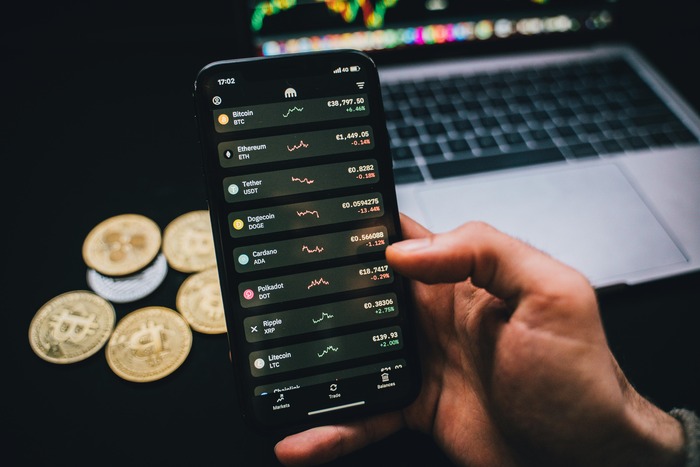
BitMart's commercial proposition is access to tokens that larger exchanges have not listed, across a catalogue that extends far beyond Bitcoin, Ethereum and the established altcoins into projects in their first weeks of existence.
That is a real service for a particular trader and a structural risk for everyone else. A low listing bar means a substantial proportion of listed assets will fail, some will turn out to have been designed to fail, and the exchange is not representing otherwise. Listing is access, not endorsement, and no venue in this tier performs diligence you could rely on.
The practical consequence is liquidity, not just quality. Order books on long-tail pairs here can be thin enough that exiting a position costs several percent in slippage, which is invisible in the fee schedule. Depth at your intended size is the number that matters, and it has to be checked in the book rather than inferred from the exchange's reported volume.
The platform also runs a launchpad for new token sales and staking and earn products, and the BMX token provides fee discounts and tiered benefits in the usual pattern.
Transparency and What It Actually Proves
BitMart publishes proof-of-reserves information and states that most client funds are held in cold storage. It has also run a public post-incident forensics bounty programme through HackenProof, which is a more constructive response than most breached exchanges manage.
A proof-of-reserves snapshot needs to be read for what it is. It demonstrates that an exchange controlled certain assets at a moment in time. It does not show liabilities, does not establish that those assets were unencumbered, and does not constrain what happens the following day. It is materially weaker than an audit, and no snapshot has ever prevented an insolvency at any venue.
Combined with Cayman registration, an absence of meaningful prudential licensing and a nine-figure breach in its history, the conclusion is not subtle. Use this as a venue to execute a specific trade, and keep custody yourself. How to store crypto in your own wallet removes every category of exchange risk simultaneously, and it is the single decision that would have protected anyone in December 2021.

Regulation and Availability
BitMart operates globally with restrictions that vary by region, applies identity verification, and does not hold the kind of authorisation carried by a MiCA-licensed European exchange or a US-regulated venue. There is no deposit protection and no supervisory body to which you can escalate.
The FTC inquiry following the 2021 hack is the closest thing to formal scrutiny in its record, and it concerned the handling of the breach rather than the exchange's solvency or conduct generally. That is worth knowing in both directions: it means an outside authority examined the incident, and it also means the exchange's day-to-day operations have never been subject to the kind of ongoing supervision a licensed venue accepts as a condition of operating.
Practical Cautions
- Read the 2021 breach as a design question, not a news item. A single key controlling two hot wallets is the issue. Look for evidence of multi-signature custody and automated outflow limits before trusting the platform with a balance.
- Assume the long tail is illiquid. Test exit depth at your size before entering. Slippage on a thin pair will dwarf the trading fee.
- Listing is not vetting. Most early-stage tokens fail. The exchange's willingness to list one carries no information about it.
- Proof of reserves is a snapshot. Assets at a moment, with no statement of liabilities. Treat it as a weak positive rather than an assurance.
- Launchpad sales concentrate risk. A new token allocation is an illiquid, unvalued position with lockup conditions, and crypto scams cluster around exactly these launches.
- Withdraw anything you are not trading. This is the whole lesson of the page.
Who BitMart Suits
BitMart suits experienced traders who specifically need early access to small-cap tokens, who verify liquidity themselves, and who keep only working balances on an unlicensed offshore exchange. For that narrow use it functions, and its post-incident bounty programme and reserve disclosures are better than nothing.
It suits nobody arriving new. A crypto beginner is far better served by a licensed venue such as Coinbase with a small vetted catalogue and a regulator behind it, and anyone whose real question is trading versus holding over years should hold nothing here. Traders wanting breadth with somewhat more established infrastructure commonly look at KuCoin instead.
The fair summary is that BitMart is a long-running exchange offering genuine listing breadth, whose worst day exposed a custody architecture that should not have existed at that scale, and which has since made real if incomplete transparency efforts. It is usable with discipline and unsuitable as a place to keep money. Understanding crypto exchanges means being able to say which of those two things you are doing.
Visit Exchange
Learn more about this cryptocurrency exchange platform
This is not financial advice. Cryptocurrency exchanges involve significant risks, including potential loss of all funds. Always verify the platform is legal in your jurisdiction and never invest more than you can afford to lose.
BitMart: Frequently Asked Questions
What is BitMart?
BitMart is a global cryptocurrency exchange founded in 2017, offering spot and futures trading with a large selection of smaller-cap altcoins.
Is BitMart safe?
BitMart suffered a major hot-wallet breach in December 2021, losing roughly 196 million dollars, and said it would compensate affected users. Security has since been improved, but it is a custodial exchange and standard risks apply.
What are BitMart's fees?
BitMart uses a tiered maker and taker model with discounts for BMX token holders and higher volume tiers. Confirm current rates on the official fee page.
Does BitMart serve US customers?
BitMart has historically offered limited services to US users, but availability and restrictions change over time. Verify the current terms for your jurisdiction before signing up.
Free Crypto Tools
*Disclaimer: The information provided here is for informational purposes only and does not constitute financial advice. Cryptocurrency trading involves risks, so please DYOR. For beginners, check out our Beginners Guides to learn more.