What Is a Rug Pull?

On this page
What Is a Rug Pull?
Imagine buying a hyped new token, watching it moon for a day, then seeing its price drop to near zero while the creators vanish. That vanishing act has a name in crypto - a rug pull. If you have ever wondered how these schemes work or how to avoid them, you are not alone.
This guide breaks down what a rug pull is, why it happens, how to spot red flags in minutes, and what you can do to protect your money. If you are new to crypto safety, start by skimming our primer on Crypto Scams, then come back here for deeper, hands-on defense tips.
You will learn to read basic on-chain signals, ask the right questions about token mechanics, and build a routine that filters out 95% of shady launches while still leaving room for careful, educated risk taking.
Why Rug Pulls Matter And How We Got Here
Rug pulls exploded during the 2020 DeFi Summer, when permissionless token creation and instant liquidity on decentralized exchanges made it possible for anyone to launch a token in minutes. That openness is a core feature of blockchain - it lowers barriers to innovation - but it also lowers barriers for scammers.
On a DEX, token creators can pair their new token with ETH, USDC, or another asset and seed a liquidity pool. Early buyers add more liquidity and trade volume, pushing up price and visibility. If the creators retain control of the liquidity or hold a large supply, they can drain value or dump into buyer demand. The result is a rapid price collapse that strands investors with near-worthless tokens.
Throughout 2021, as yield farming and meme coin launches multiplied, rug pulls became a high frequency risk. Some were blunt liquidity drains. Others involved subtle forms of control like hidden transfer taxes, blacklists, or upgradeable contract functions. Rug pulls are not the same as protocol hacks or market crashes. They are closer to an exit scam - the creators pull the plug on value by design, not by accident.
How Rug Pulls Work: Types And Mechanics
A rug pull is an exit strategy disguised as a launch. The mechanics vary, but the core idea is consistent: capture liquidity or demand, then remove it faster than buyers can react. Think of it like a shop that fills with customers because of a sale, then the owner locks the doors and sneaks out with the cash drawer.
Most rug pulls fall into a handful of patterns:
- Liquidity Pull on AMMs - Creators seed a pool on a DEX, market the token, then withdraw most or all of the paired liquidity. Price collapses because there is no longer any meaningful market depth. If liquidity was never locked or time-locked, this can happen within hours.
- Team Dump / Distribution Rug - Founders keep 50% to 80% of the token supply, wait for price to rise, then sell in large tranches. Even if liquidity is locked, concentrated supply guarantees a sell wall. Vesting schedules are either fake or adjustable.
- Malicious Mint or Upgrade Functions - Contracts include backdoors that let owners mint unlimited tokens, pause transfers, or redirect liquidity. A single call can flood the market or freeze holders while insiders exit. This risk is highest in unaudited or upgradeable contracts.
- Honeypot Taxes and Blacklists - Tokens add 10% to 40% transfer taxes that go to a developer-controlled wallet, or include blacklist logic that prevents certain addresses from selling. Buyers can enter but cannot exit profitably.
- Soft Rug / Abandonment - Teams halt development, drain treasury wallets via consulting fees, or slowly sell allocations while keeping the project technically alive. Price grinds to near zero over weeks instead of minutes.
All of these patterns exploit the same asymmetry: creators know their contract and liquidity setup, while new buyers do not. That is why understanding the basics of smart contracts and tokenomics is essential if you want to venture beyond blue chips.
On-Chain Red Flags You Can Check In Minutes
You do not need to be a Solidity expert to catch obvious rug mechanics. With a few quick checks on a block explorer, you can eliminate high risk tokens before you buy.
- Unlocked or Creator-Controlled Liquidity - If the liquidity provider (LP) tokens are in the deployer's wallet or a fresh wallet, the pool can be drained at any time. Prefer time-locked or multi-signature vaults, and verify lock duration and amounts.
- Concentrated Supply and No Vesting - If top 5 wallets hold 60% to 90% of supply and those wallets are not vesting or contract-locked, a dump is one click away. Team and treasury wallets should have transparent cliffs and linear vesting.
- Unlimited Mint or Owner Privileges - Look for functions like mint, setTax, blacklist, pause, or upgrade. If the owner can change critical parameters without a time delay or multi-sig approval, you are trusting people over code.
- Honeypot Symptoms - Excessive swap slippage, failing sell transactions, or transfer taxes above 10% can trap you. Tiny sell approvals that work only for whitelisted addresses are another signal something is wired against you.
- Anonymous Team With No Accountability - Pseudonymity is common in crypto, but total opacity plus suspicious token mechanics is a dangerous mix. Combine code risk and identity risk, and the expected loss rises sharply.
Run these checks as part of a standard process. If a token fails even one critical test, skip it. There will always be another opportunity that does not require you to ignore obvious risk.
Two Mini Case Studies: How Rugs Look In The Wild
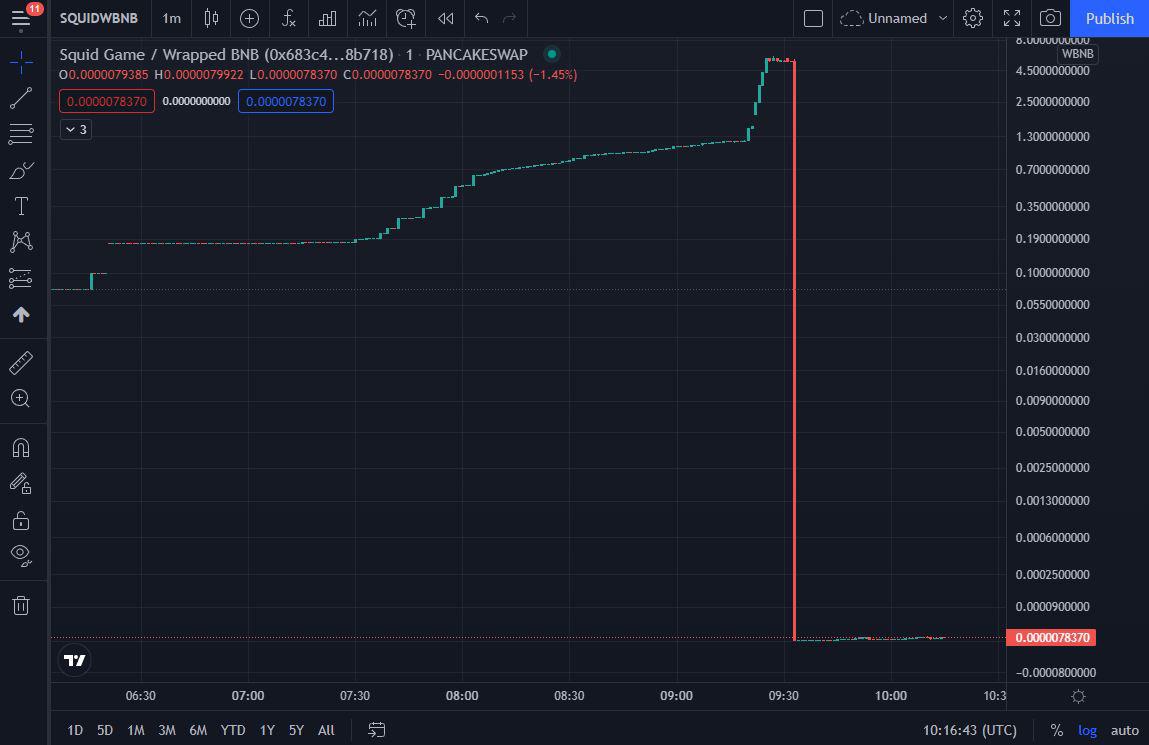
Case Study 1 - The Viral Meme Coin: A token tied to a popular TV show explodes on social media. Price rises thousands of percent in a few days. Sell transactions start failing for some holders. The contract includes a blacklist and a stealthy 20% tax routed to the deployer. When attention peaks, the team drains liquidity, and the token collapses to near zero within minutes. If this sounds familiar, read our breakdown of The Squid Game Crypto Scam from November 2021 for a real-world echo.
Case Study 2 - The DeFi Yield Token: A new chain's top trending token advertises 200% APY and "liquidity locked for 99 years." The lock is genuine, but 70% of the token supply sits in the team's wallets with no vesting. As TVL climbs, the team sells in stages across multiple wallets, turning the chart into a staircase down. It is not a single hard rug - it is a distribution rug that bleeds buyers over weeks. The liquidity lock was a decoy for a different kind of control.
Protecting Yourself: A Practical Playbook
You do not need to avoid all early-stage tokens forever. You do need a routine that filters out the worst 90% and sizes the remainder conservatively. Start by committing to research - our guide on DYOR (Do Your Own Research) lays out a repeatable method that pairs fundamentals with on-chain checks.
If you are new or time constrained, favor established assets and venues. Buying large-cap coins or vetted tokens on regulated exchanges like Coinbase or Kraken reduces counterparty and contract risk significantly. If you explore smaller caps, size positions as "experiment money," not core savings.
Self-custody improves security, but only if you do it right. Learn to use a hardware wallet and protect your seed phrase offline. Storing funds across multiple wallets with different permissions - for example, one wallet for experimentation, another for long-term holdings - limits blast radius if a risky token compromises wallet approvals. If you need a refresher, see our primer on how to store crypto.
Treat on-chain approvals like open tabs on your credit card. Revoke unused token permissions periodically. When gas is high, approvals can get expensive, so plan batches of actions and understand gas fees so you do not rush during peak volatility.
Finally, pressure test narratives. If a token promises triple-digit yields without explaining sustainable cash flows, assume those yields are coming from emissions that will dilute you. If a roadmap is all marketing and no specifics, or if a team refuses basic transparency about token distribution, let that be your signal.
Regulation, Enforcement, And The Limits Of Recourse
Regulators worldwide have increased scrutiny on crypto fraud since 2021, and rug pulls are on the radar. Civil and criminal actions have targeted token creators who misrepresented tokenomics, siphoned liquidity, or used deceptive marketing. Enforcement takes time, and cross-border teams complicate jurisdiction, but victims do occasionally see asset freezes or partial recovery when funds pass through centralized choke points.
That said, most rug pulls are designed to minimize recovery odds. Teams use mixers, cross-chain bridges, and short-lived wallets. They often operate from regions where enforcement is slow or coordination is weak. If an offering looks like an unregistered security and the team is promoting fixed returns, risk is doubled - you face both economic loss and potential legal gray zones.

Because laws are evolving, always consider how your jurisdiction treats token sales, disclosures, and investor protections. Many regions apply old rules to new instruments. When in doubt, ask whether the project would pass a basic transparency test even outside of crypto - if the answer is no, walk away.
If You Were Rug Pulled: Triage And Next Steps
First, stop and document. Save transaction hashes, contract addresses, social media posts, and screenshots of the token's website and announcements. This helps establish a timeline and intent. If any funds routed through a centralized exchange, you may be able to submit reports to compliance teams with your evidence. Law enforcement reports may also be warranted in larger losses.
Second, do not chase losses. Scammers often follow up with "recovery" schemes that require upfront fees or seed phrase disclosures. No legitimate recovery service will ever ask for your private keys or seed. If a wallet was compromised via approvals, revoke permissions from a clean wallet and move unaffected funds to new addresses with fresh seed phrases.
Finally, review tax implications. Depending on your jurisdiction, realized losses may be deductible or may need to be reported differently. Our guide to cryptocurrency taxes outlines concepts that help you speak with a qualified professional.
Conclusion: Spot The Tells, Keep Your Edge
Rug pulls thrive in the same fertile ground that makes crypto exciting - permissionless markets, open participation, and rapid iteration. With a disciplined process, you can enjoy that upside while avoiding traps. Start by screening for unlocked liquidity, concentrated supply, and owner backdoors. Then pressure test the story: if the tokenomics do not add up, neither will the price.
If you are just getting started, focus on education and safe venues. Learn how exchanges work in our guide to understanding crypto exchanges, then build your own research routine with DYOR. With a few core habits, you will recognize most rugs before they reach your wallet, and you will feel more confident navigating the rest.
*Disclaimer: The information provided here is for informational purposes only and does not constitute financial advice. Cryptocurrency trading involves risks, so please DYOR. For beginners, check out our Beginners Guides to learn more.